(AAPPAO)

Boxer, humanitarian, Muhammad Ali
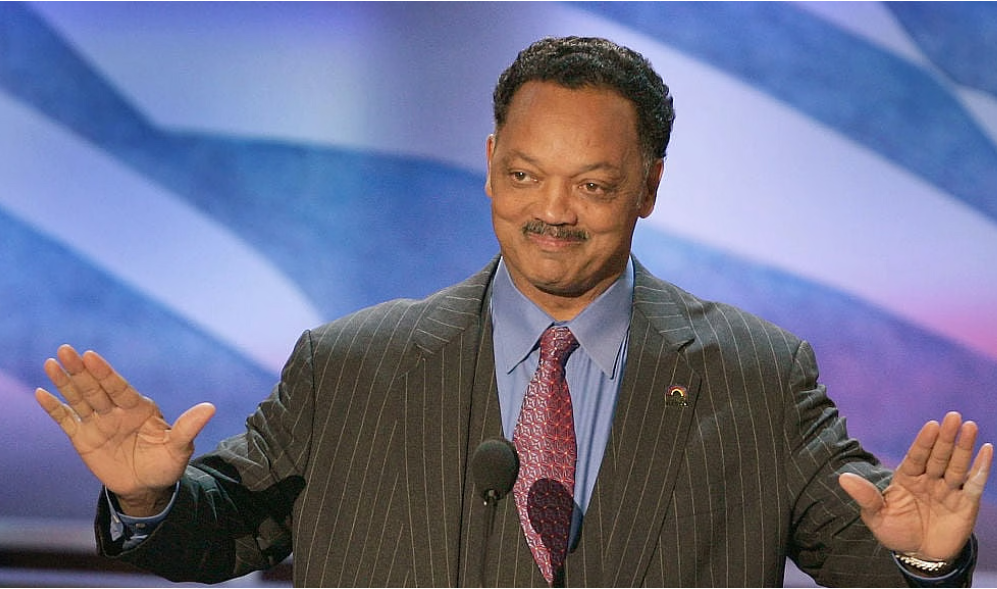
Civil rights icon, Presidential nominee, Rev. Jesse Jackson
Mission Statement
The African American Parkinson Patient Advocacy Organization (AAPPAO) provides resources, education, and support that enhance the quality of life for all those affected by Parkinson’s disease in the African American community, supporting research on new treatments for symptoms and, hopefully, someday finding a cure.Our work will include:
- Ensuring that every patient receives the best care possible.
- Advancing our knowledge of Parkinson’s disease.
- Searching for ways to improve treatments that change the course of the disease.
 Contributions from supporters will help the AAPPAO discover and fund people, places, and programs that may well affect change in our understanding of Parkinson’s disease and our hope for its future. The AAPPAO holds the fervent belief that a comprehensive approach is the most effective methodology for treatment and advancement. In this regard, we plan to consider all aspects of Parkinson’s care:
- Medical and surgical care from doctors and nurses, to ensure that people with Parkinson’s disease get optimal medical management and understand their options for surgical and alternative therapies
- Physical therapy to help people with the motor symptoms of Parkinson’s disease
- Occupational therapy to help people maintain independence
- Speech therapy to aid communication
- Counseling and therapy for the depressed or anxious
- Art (dance, music, theatre) therapy, exercise, and nutrition programs
- Respite care for caregivers, and more
Our cause is urgent–this year, more than 60,000 patients will be diagnosed in the United States, joining the one million people living with the disease in the U.S. and fourto six million worldwide. AAPPAO's research, educational, and fundraising efforts are focused and results oriented. We seek the highest impact for patients living with the disease today.
.png) The National Black Church Initiative Final Report of the Michael J. Fox Foundation for Parkinson's Research and Next Steps.pdf [3.7mb]
The National Black Church Initiative Final Report of the Michael J. Fox Foundation for Parkinson's Research and Next Steps.pdf [3.7mb]
The following is the list of accomplishments we have achieved over the past year, 2025. This has been a remarkable period of learning and growth. Here is a detailed snapshot of the year.
NBCI developed a comprehensive website as a primer for members unfamiliar with Parkinson's Disease, and the first serious attempt to educate the Black community on the deep ramifications of Parkinson’s disease. It became apparent to us that we had to work hard to develop the language, messaging, and material to push this program. In the “Next Steps” section of this report, we have provided the key elements of a roadmap on how to institutionalize the gains and maximize and build off of the strongest moments of the NBCI Parkinson’s Program.
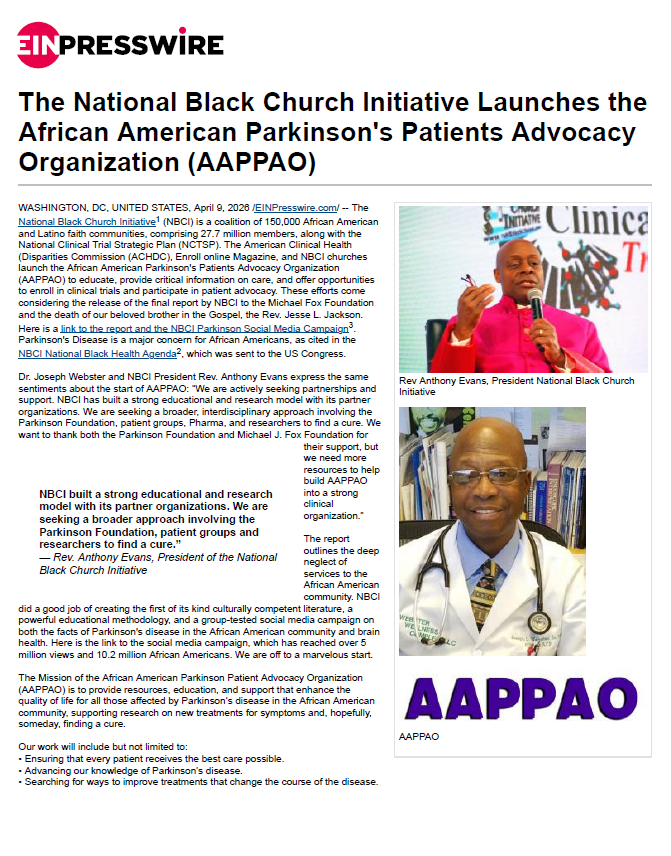 WASHINGTON, DC, UNITED STATES, April 9, 2026 /EINPresswire.com/ -- The National Black Church Initiative1 (NBCI) is a coalition of 150,000 African American and Latino faith communities, comprising 27.7 million members, along with the National Clinical Trial Strategic Plan (NCTSP). The American Clinical Health (Disparities Commission (ACHDC), Enroll online Magazine, and NBCI churches launch the African American Parkinson's Patients Advocacy Organization (AAPPAO) to educate, provide critical information on care, and offer opportunities to enroll in clinical trials and participate in patient advocacy. These efforts come considering the release of the final report by NBCI to the Michael Fox Foundation and the death of our beloved brother in the Gospel, the Rev. Jesse L. Jackson. Here is a link to the report and the NBCI Parkinson Social Media Campaign3. Parkinson's Disease is a major concern for African Americans, as cited in the NBCI National Black Health Agenda2, which was sent to the US Congress.
Dr. Joseph Webster and NBCI President Rev. Anthony Evans express the same sentiments about the start of AAPPAO: “We are actively seeking partnerships and support. NBCI has built a strong educational and research model with its partner organizations. We are seeking a broader, interdisciplinary approach involving the Parkinson Foundation, patient groups, Pharma, and researchers to find a cure. We want to thank both the Parkinson Foundation and Michael J. Fox Foundation for their support, but we need more resources to help build AAPPAO into a strong clinical organization.”
The report outlines the deep neglect of services to the African American community. NBCI did a good job of creating the first of its kind culturally competent literature, a powerful educational methodology, and a group-tested social media campaign on both the facts of Parkinson's disease in the African American community and brain health. Here is the link to the social media campaign, which has reached over 5 million views and 10.2 million African Americans. We are off to a marvelous start. The Mission of the African American Parkinson Patient Advocacy Organization (AAPPAO) is to provide resources, education, and support that enhance the quality of life for all those affected by Parkinson’s disease in the African American community, supporting research on new treatments for symptoms and, hopefully, someday, finding a cure.
Our work will include but not limited to:
- Ensuring that every patient receives the best care possible.
- Advancing our knowledge of Parkinson’s disease.
- Searching for ways to improve treatments that change the course of the disease
- Medical and surgical care from doctors and nurses, to ensure that people with Parkinson’s disease get optimal medical management and understand their options for surgical and alternative therapies
- Physical therapy to help people with the motor symptoms of Parkinson’s disease
- Occupational therapy to help people maintain independence
- Speech therapy to aid communication
- Counseling and therapy for the depressed or anxious
- Art (dance, music, theatre) therapy, exercise, and nutrition programs
- Respite care for caregivers, and more
Education
African Americans and Parkinson’s Disease
Currently, about one million people in the US have Parkinson’s disease (PD). The prevalence of PD in the Black and African American community is not ex- actly known. This is partly due to limited inclusion of Black and African American people in research studies. Approximately 6% of all PD clinical trial participants are “non-White”.
African Americans are about half as likely to be diagnosed with PD as their White counterparts. When diagnosed, they are often at a later stage in their disease than their White counterparts. Appropriate and representative participation in research will improve understanding of how PD impacts the Black and African American community.
Who is at risk for Parkinson’s Disease Although the cause of most Parkinson's disease cases is unknown, researchers believe it is caused by multiple factors. Some of these risk factors include:
- Aging. The greatest risk factor for PD is aging, and researchers expect the number of people with PD to double by 2040 due to an aging population.
- Environment. Factors like head injury, pesticide exposure or stressors of military service (like traumatic brain injury or exposure burn pits) are associated with an increased risk of developing PD
- Genetics. Researchers estimate about 30% of PD risk is explained by genetics. Several genes increase the risk of Parkinson's disease (PD) but don't guarantee the disease.
- African ancestry.
-
In 2023, researchers found a GBA gene variant - tinyurl.com/yj78bdy3 that raises PD risk in people of
- Stiffness, or rigidity – where someone may experience muscle stiffness
- Slowness, or bradykinesia – where someone may experience decreased spontaneous and voluntary movement. This could look like slower walking, less arm swinging while walking, or decreased blinking or facial expressions
- Resting tremor – where someone may experience a rhythmic, involuntary shaking that occurs in a finger, hand or limb when relaxed and disappears during voluntary movement.
- Non-movement symptoms
- Constipation
- Low blood pressure
- Sexual, sweating, and urine problems
- Mood and thinking changes
- Apathy (lack of interest)
- Cognitive (memory or thinking) problems
- Mood disturbances
African American Parkinson's Patients' Portal
Please register for services
NBCI launches educational programs in Houston, TX, and St. Louis, MO.
 The National Black Church Initiative (NBCI), a coalition of 150,000 African
African American churches and 27.7 million members are joining the Michael J. Fox
Foundation, which is helping to raise awareness of Parkinson's Disease in the African American
community. We are launching an educational pilot program in two cities: Houston, TX, and St.
Louis, MO.
The National Black Church Initiative (NBCI), a coalition of 150,000 African
African American churches and 27.7 million members are joining the Michael J. Fox
Foundation, which is helping to raise awareness of Parkinson's Disease in the African American
community. We are launching an educational pilot program in two cities: Houston, TX, and St.
Louis, MO.Parkinson’s is a progressive, neurodegenerative disorder. In other words, it is a lifelong condition that affects the brain and worsens over time. Parkinson’s happens when cells in the brain that produce dopamine stop working or die. Dopamine is a neurotransmitter, a chemical that sends messages between nerve cells or between nerve cells and muscle cells to help the body function. It plays many roles in the body and affects physical and mental functions.
Rev. Anthony Evans, President of the National Black Church Initiative, says, “We are both honored and proud of the Michael J. Fox Foundation for their brilliant research and advocacy concerning Parkinsons Disease. NBCI’s effort is governed by our commitment to increase education and clinical research awareness and opportunities for both African American clinicians and patients. Our vision is to work in partnership with the Foundation to create a level-one educational and clinical delivery system to educate and empower our members toward a cure for this dreadful disease. This partnership underscores our commitment to fulfilling the principles of the NBCI National Black Health Agenda.
The cardinal symptoms of Parkinson’s are resting tremors, rigidity, slowness of movement (also called bradykinesia), feeling unsteady and having difficulties with balance (also called postural instability). Because these symptoms are related to movement, they are called “motor symptoms,” Parkinson’s is classified as a “movement disorder.”
Research indicates that African Americans are significantly less likely to be diagnosed with Parkinson's disease compared to other racial groups, often receiving a diagnosis at a later stage of the disease due to factors like limited access to healthcare, historical exclusion from research studies, and potential biases in medical practices, leading to disparities in diagnosis and treatment within the Black community; this means that while the disease may affect African Americans, they are less likely to be identified as having it compared to other populations.
Statistical Framework of African Americans and Parkinson's Disease
NBCI Parkinson and Brain Health Social Media Posts and Assets
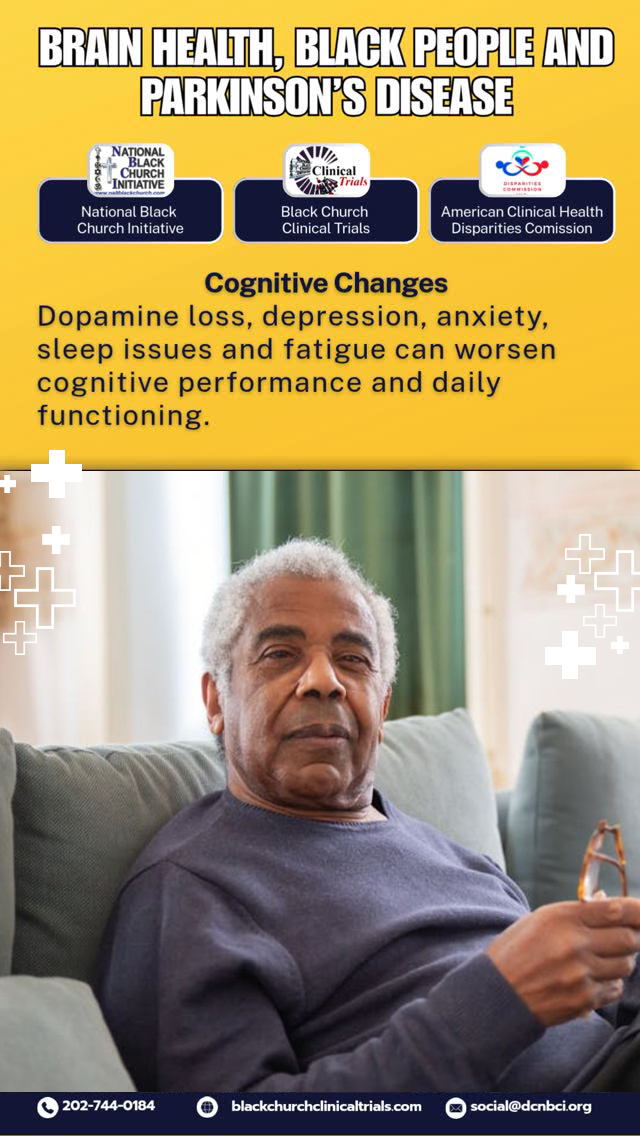
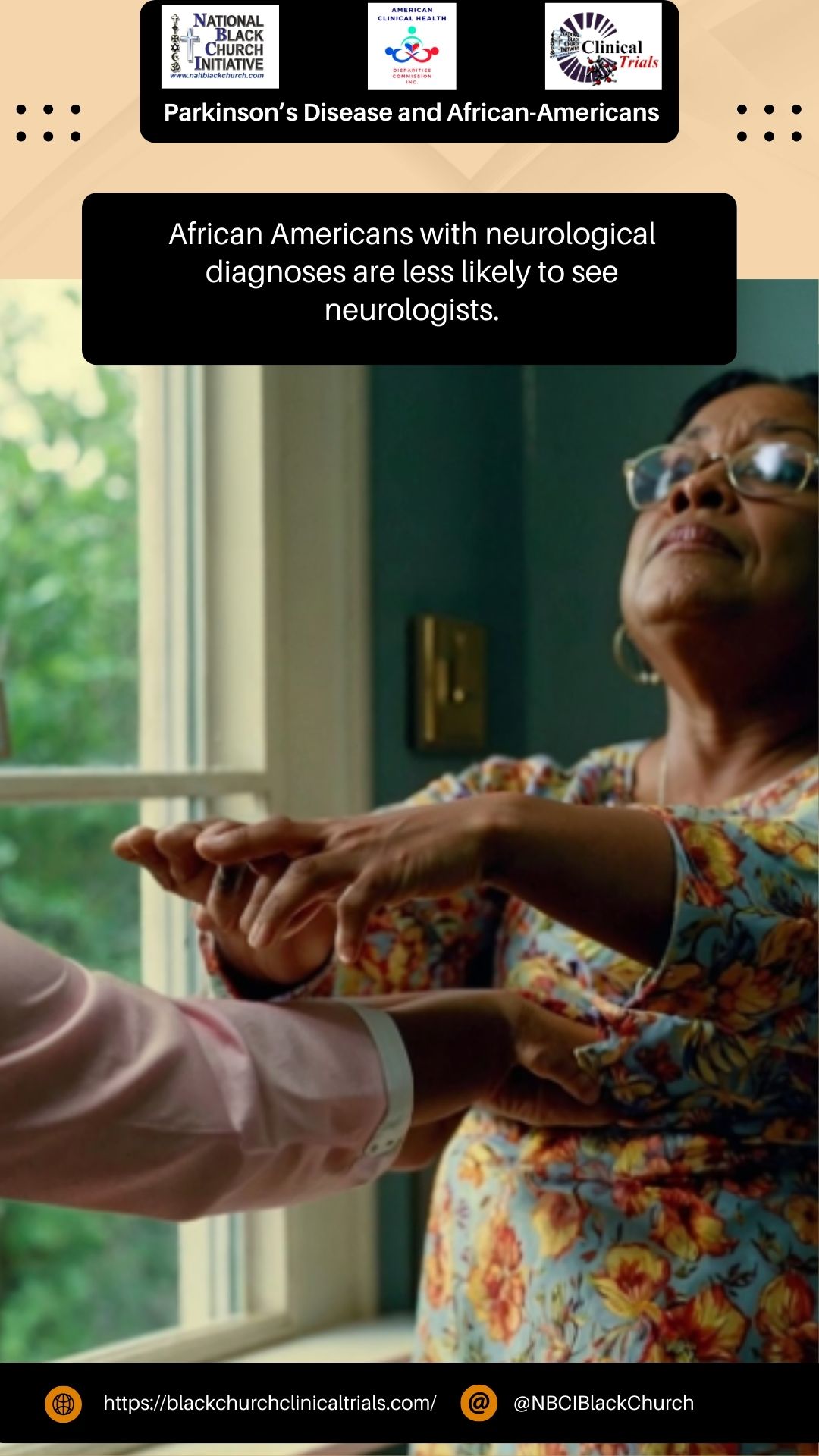
NBCI has posted several images, videos and shorts across all of its' social media platforms including Facebook, Twitter, YouTube, Instagram and TikTok.- African Americans with neurological diagnoses are less likely to see neurologists
- Disparities in Parkinson's Disease - African Americans with neurological diagnoses are less likely to see neurologists. Newly diagnosed African Americans with PD are less likely to recieve physical therapy or medications at their first appointment
- African Americans with Parkinson's Disease have higher rates of dementia diagnosis and lower rates of survival

Outreach
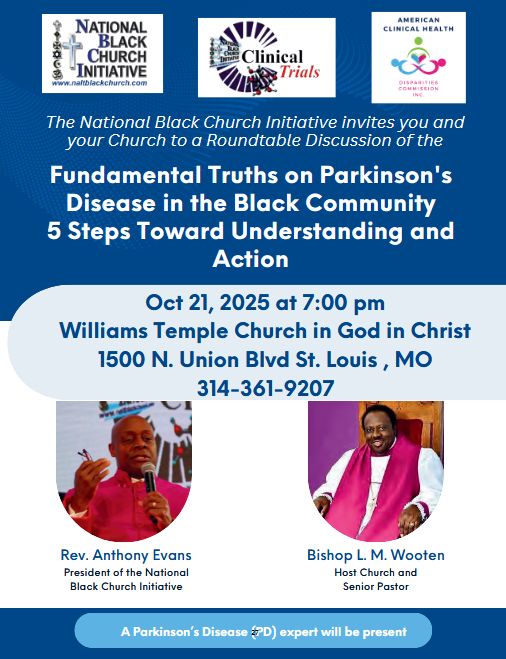
Promoting Parkinson's Clinical Trials to African Americans with Parkinson's Disease
blackchurchclinicaltrials.com
NBCI and ACHDC are helping to broaden engagement of African American and Latino communities in clinical trials with their 27.7 million members. Given the unethical and illegal conduct of the Tuskegee Experiment and the intentional withholding of critical information by government officials, NBCI takes a comprehensive, interdisciplinary approach to leverage lessons from historical medical abuses to drive robust interest in substantially improving clinical trial participationData Collection
Statistical Survey and Analysis In a broad comparative analysis of the four congregations, we see some startling but also familiar answers revealed in the surveys. The total number of surveys across the four congregations is 769.Here are some key takeaways
- The vast majority has either never heard of Parkinson’s disease or knows very little about it.
- No one has self-identified as having Parkinson’s disease. NBCI believes that this was a missed opportunity. The question should have read, “Do you or any of your family members, or anyone you know of, have Parkinson’s disease?” (Please see section 3 of this report.)
- On the question of prevalence, African Americans, as a cultural defense, will never say a particular disease runs in their race, even though the data says otherwise.
- Over 90% of the people in the four congregations are hungry for more information on Parkinson’s disease.
The Black Church Joins the Fight Against Parkinson’s Disease and is Working Toward a Cure
BlackParkD News
Parkinson’s disease (PD) is a progressive movement disorder of the nervous system. It causes nerve cells (neurons) in parts of the brain to weaken, become damaged, and die. This leads to symptoms like movement problems, tremor, stiffness, and impaired balance. As symptoms progress, people with PD may have difficulty walking, talking, or completing simple tasks.
Although the cause of most Parkinson's disease cases is unknown, researchers believe it is caused by multiple factors. Some of these risk factors include:
- Aging. The greatest risk factor for PD is aging, and researchers expect the number of people with PD to double by 2040 due to an aging population.
- Environment. Factors like head injury, pesticide exposure or stressors of military service (like traumatic brain injury or exposure burn pits) are associated with an increased risk of developing PD
- Genetics. Researchers estimate about 30% of PD risk is explained by genetics. Several genes increase the risk of Parkinson's disease (PD) but don't guarantee the disease.
- In 2023, researchers found a GBA gene variant - tinyurl.com/yj78bdy3 that raises PD risk in people of African ancestry.
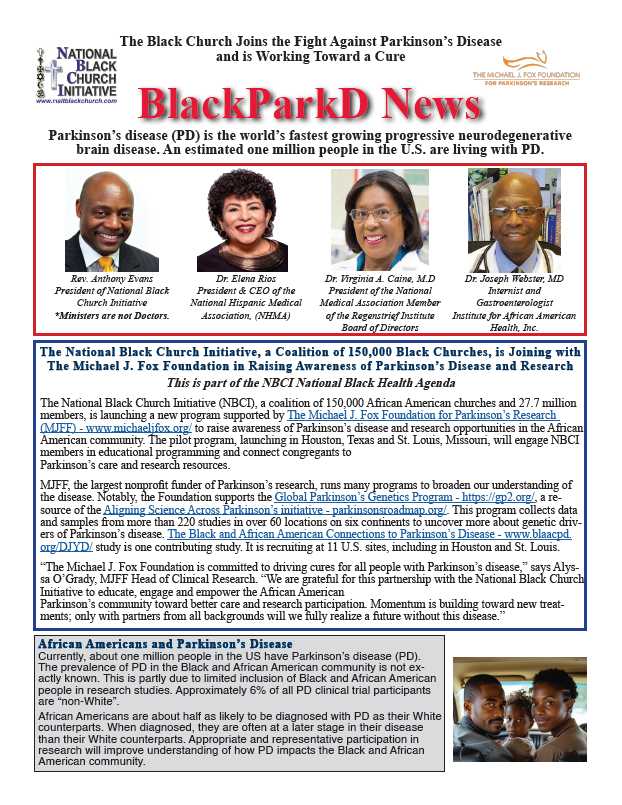 Download a copy of this important NBCI publication!
Handbook on Parkinson's Services
In progress, will be released in September 2026Parkinson's Patient Support Circle
The Event starts in September 2026Scientific Articles on African Americans and Parkinson's Disease
In progress, will be released in September 2026Brain Health, Black People and Parkinson Disease
Parkinson's disease does more than cause tremor and trouble walking. It can also affect sleep, smell, digestion and even thinking. A brain circuit tied to emotion may lead to better treatments for Parkinson's diseaseThat may be because the disease disrupts communication in a brain network that links the body and mind, a team reports in the journal Nature.
Follow this link to read the entire article
Listen to the NPR broadcast!
Preview: Michael J. Fox on Parkinson's: "Every day it gets tougher"
@michaeljfoxfoundation #parkinsonsdisease
 A Call to Action: Promoting Diversity, Equity, and Inclusion in Parkinson’s Research and Care
The current base of knowledge around Parkinson’s disease has been assembled in partnership with a cohort of participants that does not resemble the diversity of people with the disease. This poor representation in research results in an incomplete picture of the disease and disparities in care. The Michael J. Fox Foundation has defined four major areas of action: 1) identifying barriers and solutions to research participation; 2) funding inclusive research with greater participant diversity; 3) building a clinician/researcher workforce committed to health equity; and 4) supporting a more holistic understanding of PD.While factors driving disparities, including broader societal challenges, are complex, it is imperative that the PD research, care, and patient communities move in a decisive and coordinated fashion to identify and implement strategies that advance treatments for everyone with PD and eliminate care inequities.
 Parkinson’s Disease in African Americans: A Review of the Current Literature
Parkinson’s disease (PD) is the second most common neurodegenerative disease, though evidence suggests that this disorder does not affect all racial groups similarly. Research in African Americans, in particular, has been conflicting. Some studies have found similar prevalence rates in African Americans and whites whereas other studies have found much lower prevalence and incidence rates in African Americans. A few studies identify potential factors underlying these discrepancies, including biologic differences as well as disparities in healthcare access. However, African Americans remain underrepresented in research studies, which make understanding the underlying reasons for these differences difficult.The purpose of this paper is to summarize existing research in African Americans with PD, highlight some of the reasons why differences exist in diagnostic rates of PD in this population, and briefly discuss interventions that may need to be made in order to ensure adequate care is provided to these patients.
 As a library, NLM provides access to scientific literature. Inclusion in an NLM database does not imply endorsement of, or agreement with, the contents by NLM or the National Institutes of Health.
Take Action on Parkinson’s Awareness
While April is Parkinson's Awareness Month, any time of year is a time to come together to raise awareness and advance research toward a cure for Parkinson’s disease. Whether you’re new to our community or a longtime supporter, together we can make a difference.
A Guide for Navigating Parkinson’s
Parkinson’s 360: Real Talk for Patients and Families is a guide to help patients and their families navigate life with PD. (Accesa nuestra guía en Español.)

The Latest in Parkinson's Research
Read the latest developments, reporting and analysis from the world of Parkinson's research, including progress made in studies, tools and collaborations.

Perspectives on Parkinson’s
Scientists, doctors and people with Parkinson's discuss different aspects of life with the disease as well as research updates on The Michael J. Fox Foundation Parkinson’s Podcast.

