Health Emergency Declaration (HED)

NBCI Brain Health Social Media Posts and Assets

Contributions from supporters will help the AAPPAO discover and fund people, places, and programs that may well affect change in our understanding of Parkinson’s disease and our hope for its future. The AAPPAO holds the fervent belief that a comprehensive approach is the most effective methodology for treatment and advancement.

Parkinson's disease (PD) is the world's fastest growing progressive neurodegenerative brain disease. An estimated one million people in the U.S. are living with PD.
This program collects and samples from more than 220 studies in over 60 location on six continents to uncover more about genetic drivers of Parkinson's diseaes. The Black and African American Connections to Parkinson's Disease study is one contributing study. It is recruiting at 11 U.S. sites, including Houston and St. Louis.
African Americans and Parkinson's Disease - Currently, about one million people in the U.S. have Parkinson's Disease (PD). The prevalence of PD in the Black and African American community is not exactly known. This is partly due to the limited inclusion of Black and African American people in research studies. Approximately 6% of all PD clinical trial participants are 'non-White'
Parkinson's disease (PD) is the world's fastest growing progressive neurodegenerative brain disease. An estimated one million people in the U.S. are living with PD.
Some people with Parkinsons disease (PD)experience mild cognitive impairment
PD is a neurodegenerative disorder that impacts the brain, particularlyu the substantia nigra leading to a shortage of dopamine
This program collects and samples from more than 220 studies in over 60 location on six continents to uncover more about genetic drivers of Parkinson's diseaes. The Black and African American Connections to Parkinson's Disease study is one contributing study. It is recruiting at 11 U.S. sites, including Houston and St. Louis.
African Americans and Parkinson's Disease - Currently, about one million people in the U.S. have Parkinson's Disease (PD). The prevalence of PD in the Black and African American community is not exactly known. This is partly due to the limited inclusion of Black and African American people in research studies. Approximately 6% of all PD clinical trial participants are 'non-White'
PD can lead to dementia in advanced stages, with symptoms like hallucinations
Parkinson's disease (PD) is the world's fastest growing progressive neurodegenerative brain disease. An estimated one million people in the U.S. are living with PD.
While no cure exists, certain strategies can support brain health and manage symptoms
Diet: A Mediterranean or MOND diet, rich in vegetables, fruits, whole grains, and healthy fats is linked to better cognitive health
This program collects and samples from more than 220 studies in over 60 location on six continents to uncover more about genetic drivers of Parkinson's diseaes. The Black and African American Connections to Parkinson's Disease study is one contributing study. It is recruiting at 11 U.S. sites, including Houston and St. Louis.
African Americans and Parkinson's Disease - Currently, about one million people in the U.S. have Parkinson's Disease (PD). The prevalence of PD in the Black and African American community is not exactly known. This is partly due to the limited inclusion of Black and African American people in research studies. Approximately 6% of all PD clinical trial participants are 'non-White'
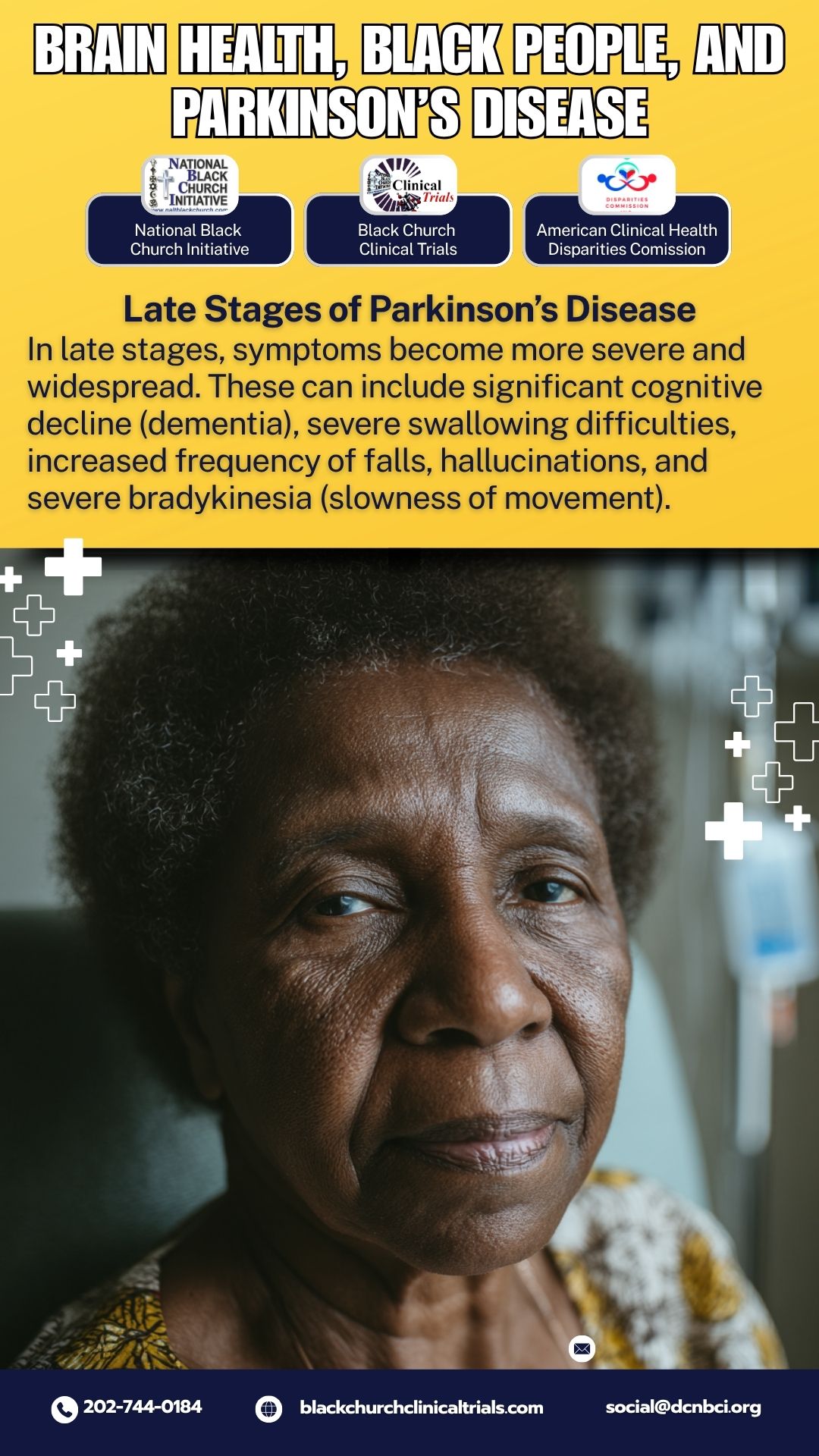
In late stages, symptoms become more sever and widespread
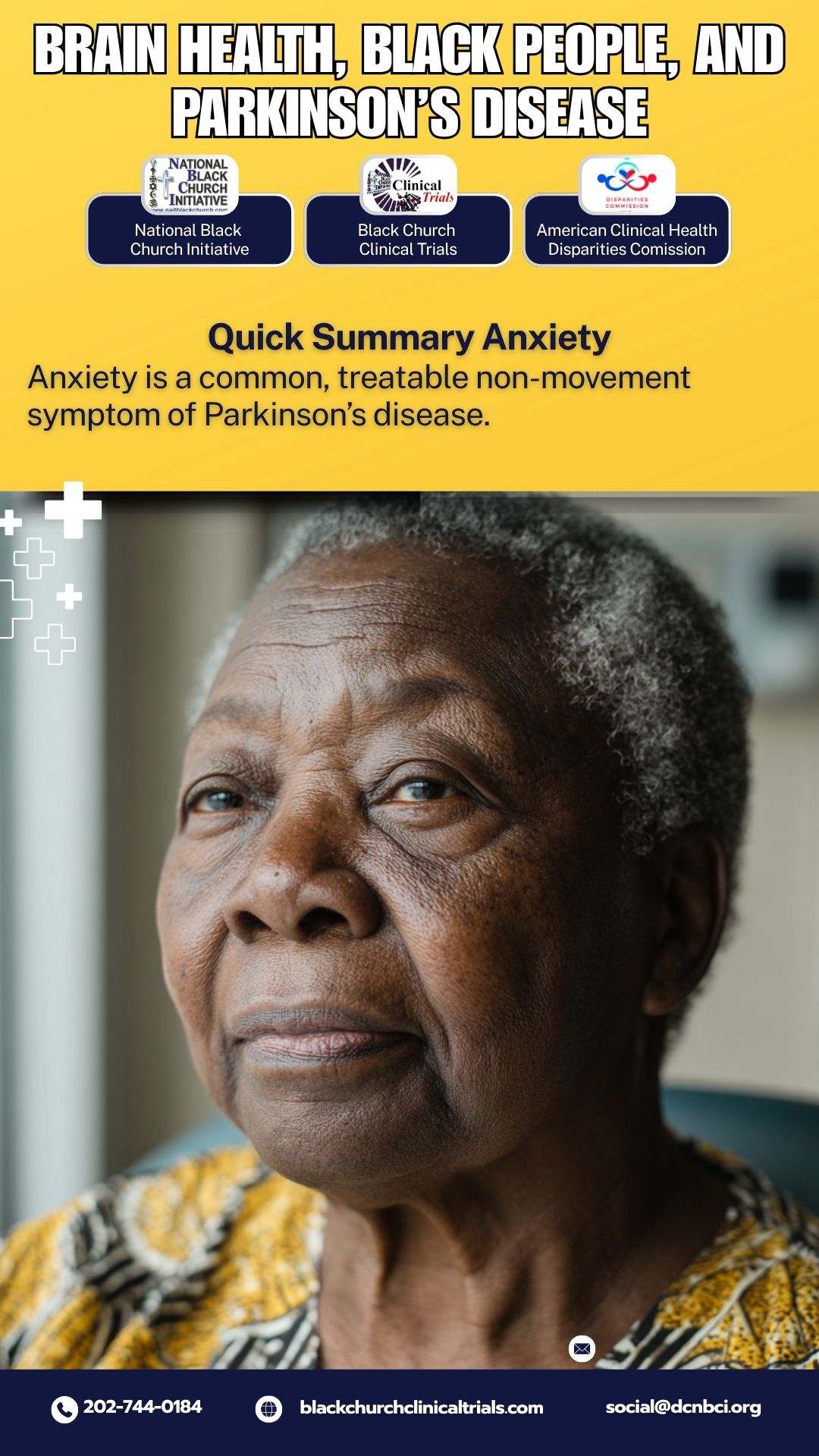
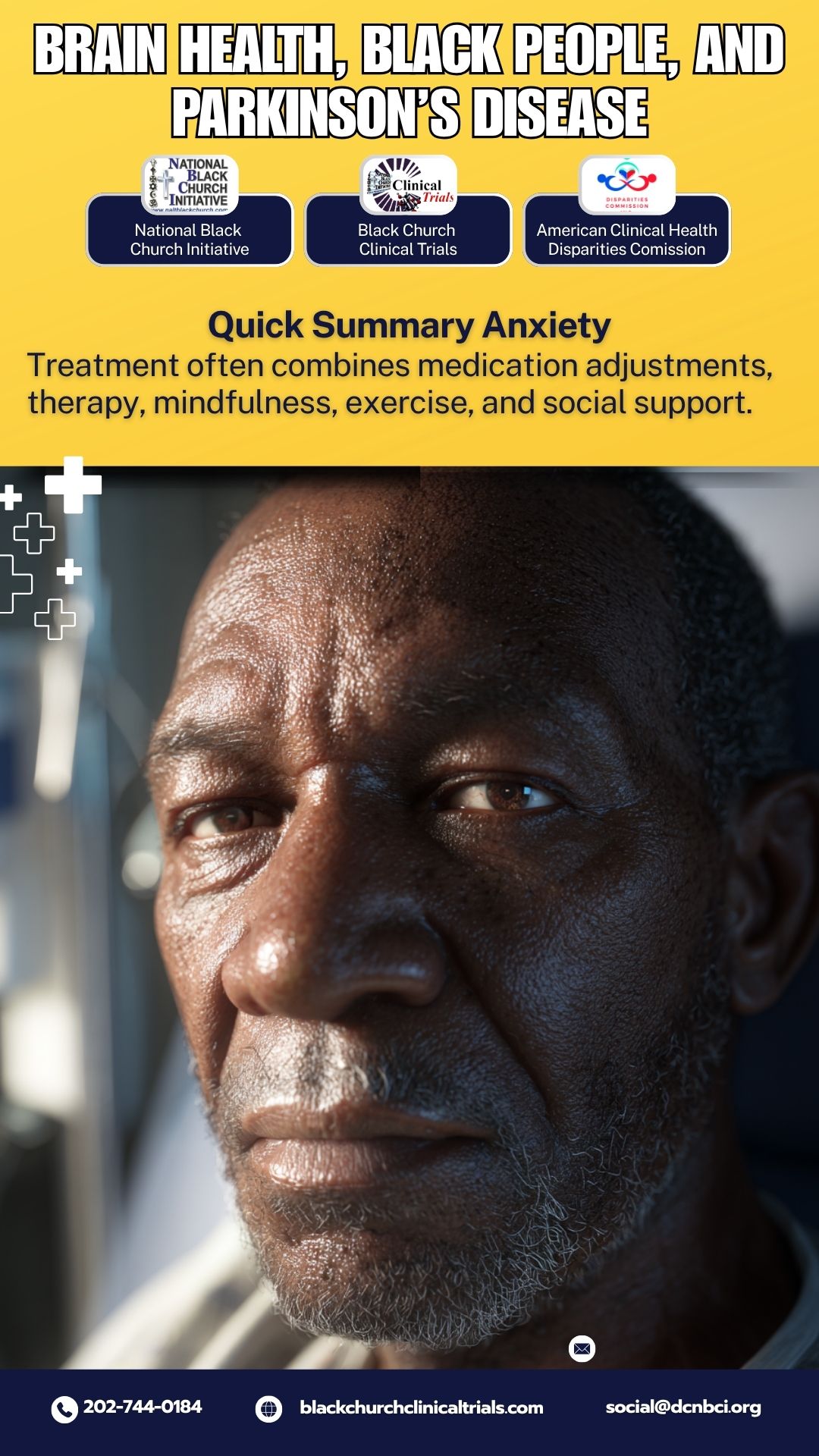
Quick Summary Anxiety is a common, treatable non movement symptom of Parkinson's disease
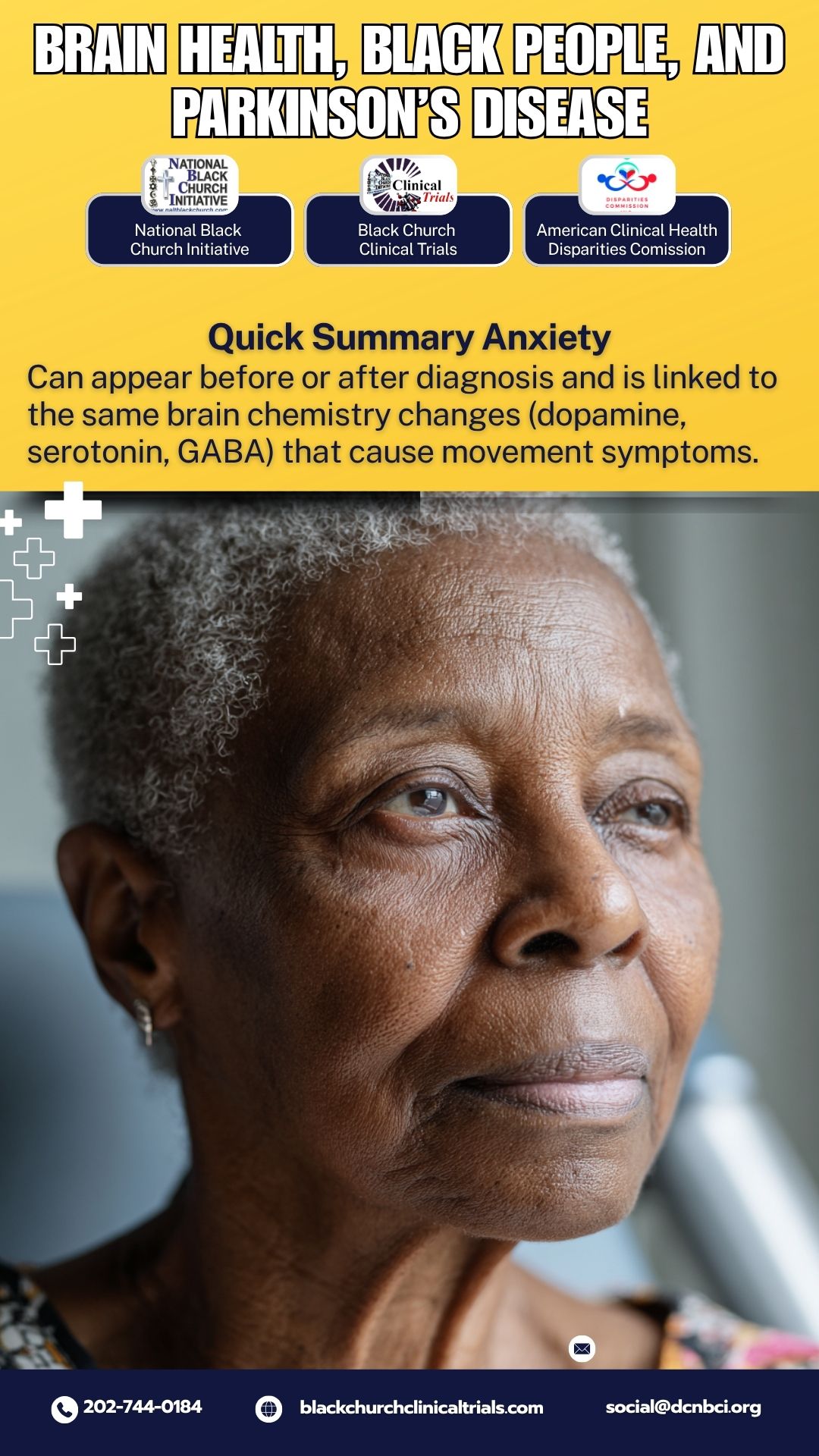
Anxiety can appear before or after diagnosis and is linked to the same brain chemistry changes (Dopamine, serotonin, GABA that cause movement symptoms)
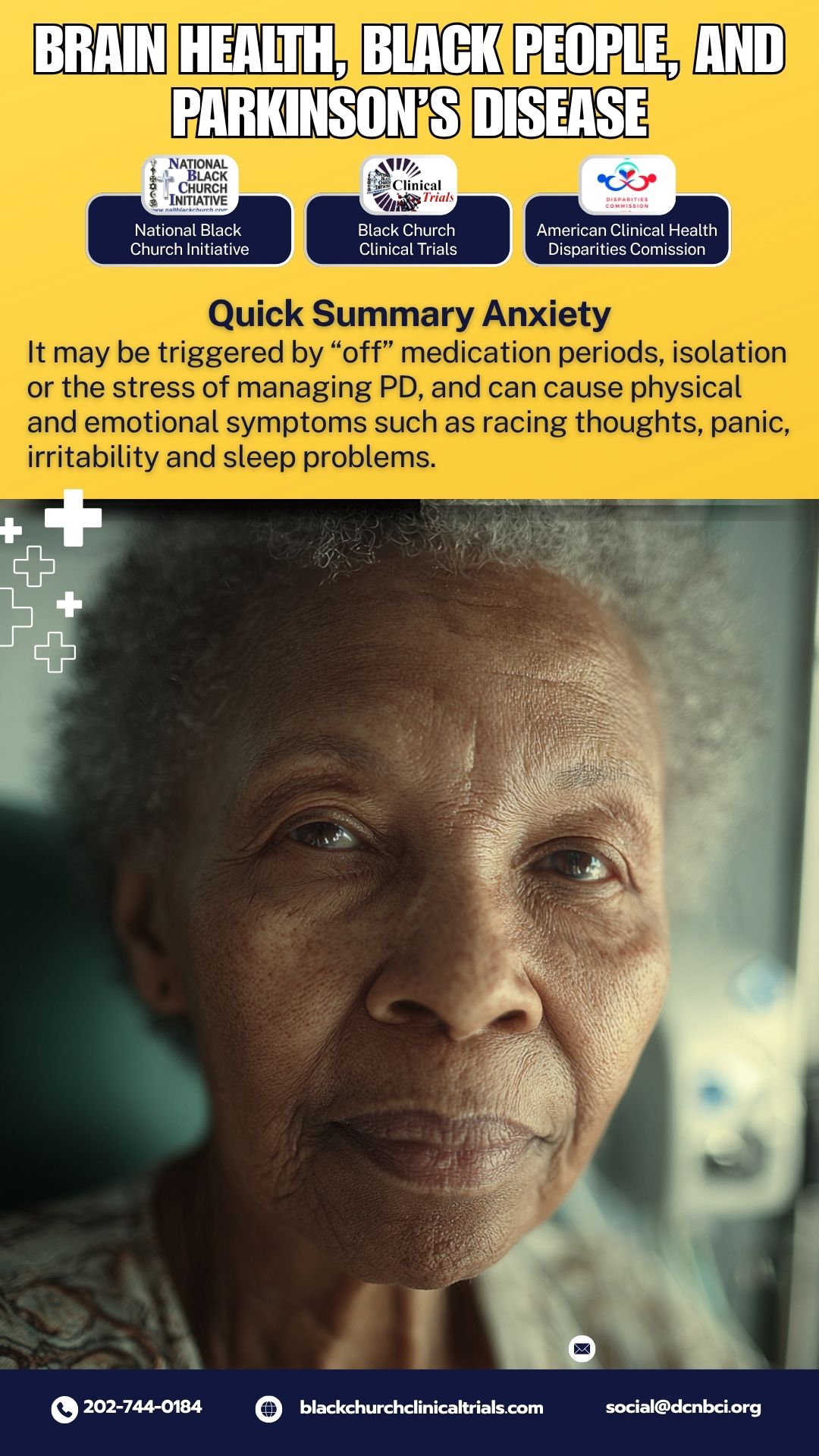
Anxiety may be triggered by 'off' medication periods, isolation or the stress of manageing PD
Therapies: Physical, occupational, and speech are used to maintain independence
Treatment often combines medication adjustments, therapy mindfullness, exercise and social support
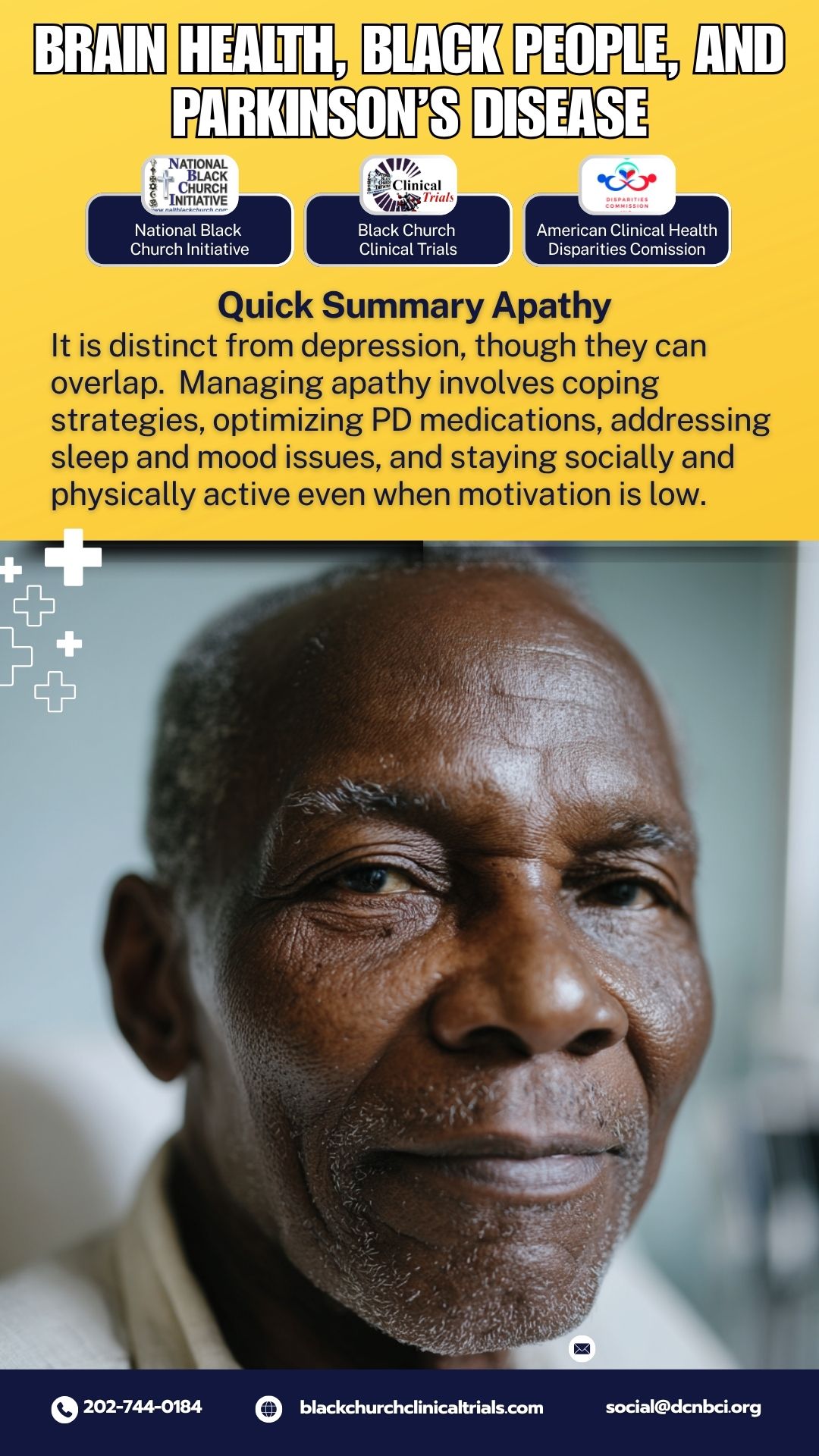
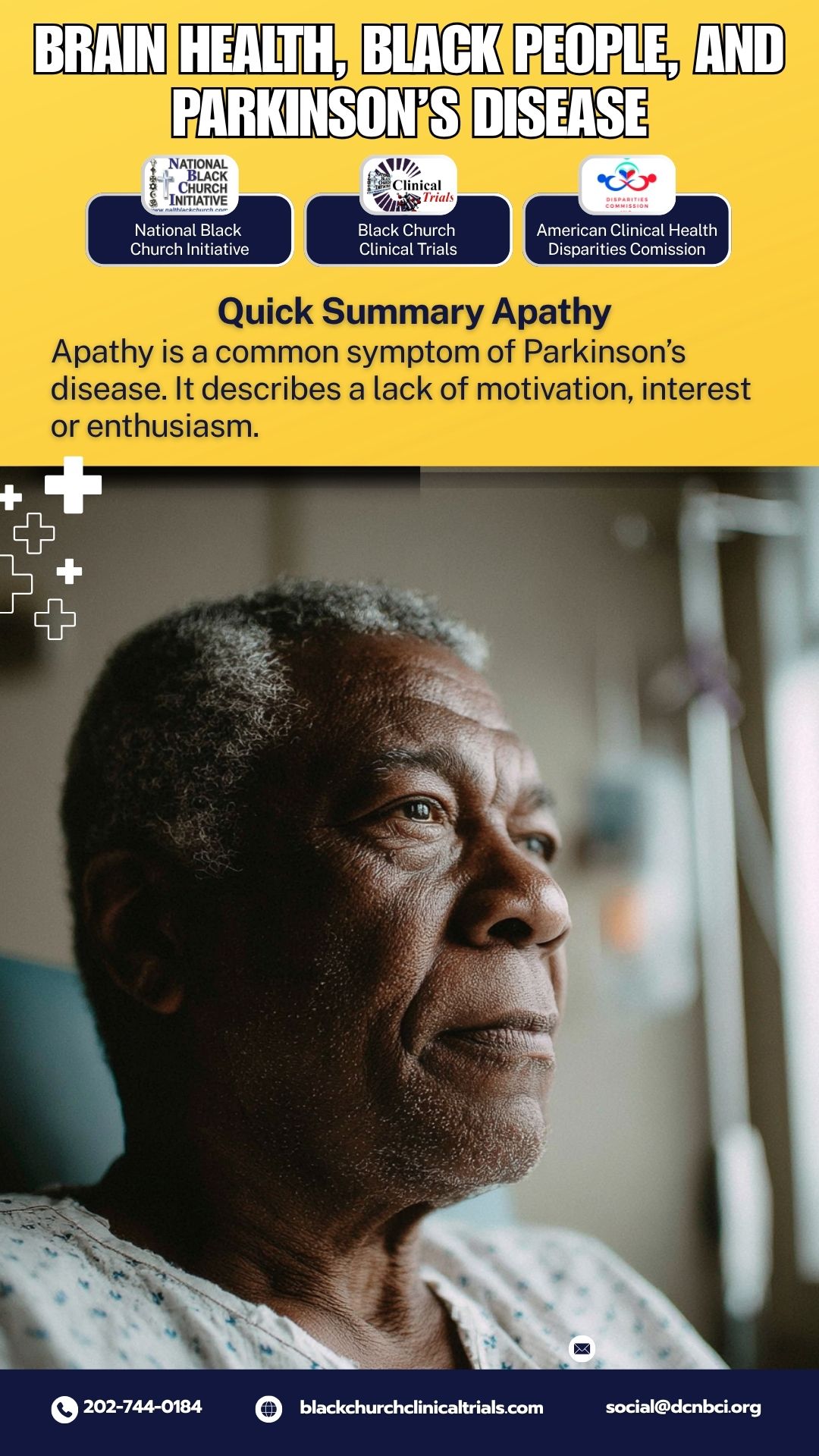
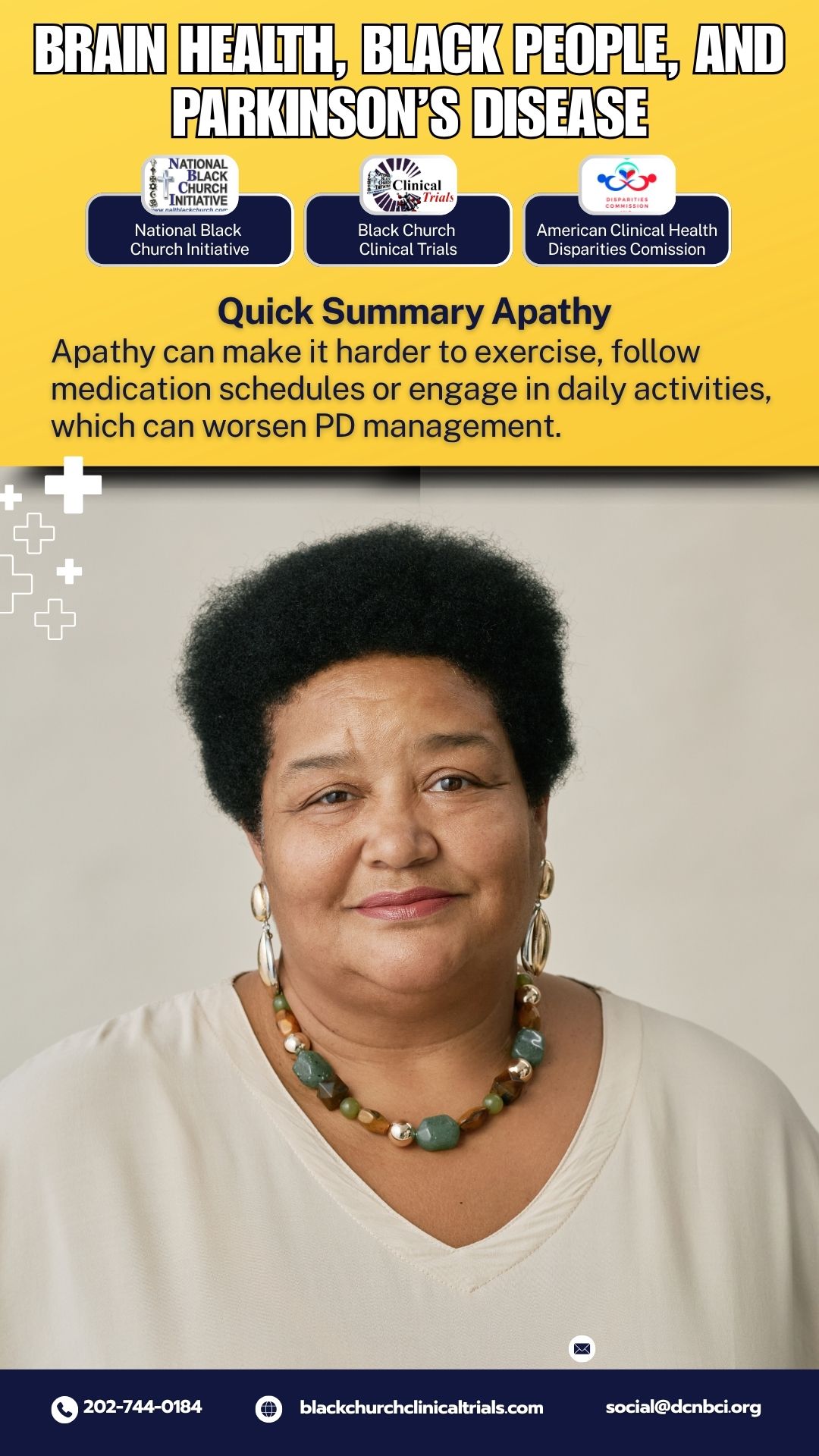
Apathy is a common symptom ofr Parkinson's disease.
Apathy can make it harder to exercise, follow medication schedules or engage in daily activities which can worsen PD management
Apathy is distinct from depression though they can overlap
Quick summary Bladder Issues and Incontinence
Therapies: Physical, occupational, and speech are used to maintain independence
Parkinsons can cause attention, memory, language and problem-solving difficulties sometimes appearing at diagnosis and progressing slowly